Did You Know?
The Children’s Act, 1998 (Act 560) requires that discipline in schools must correct behaviour without stripping a child of dignity.
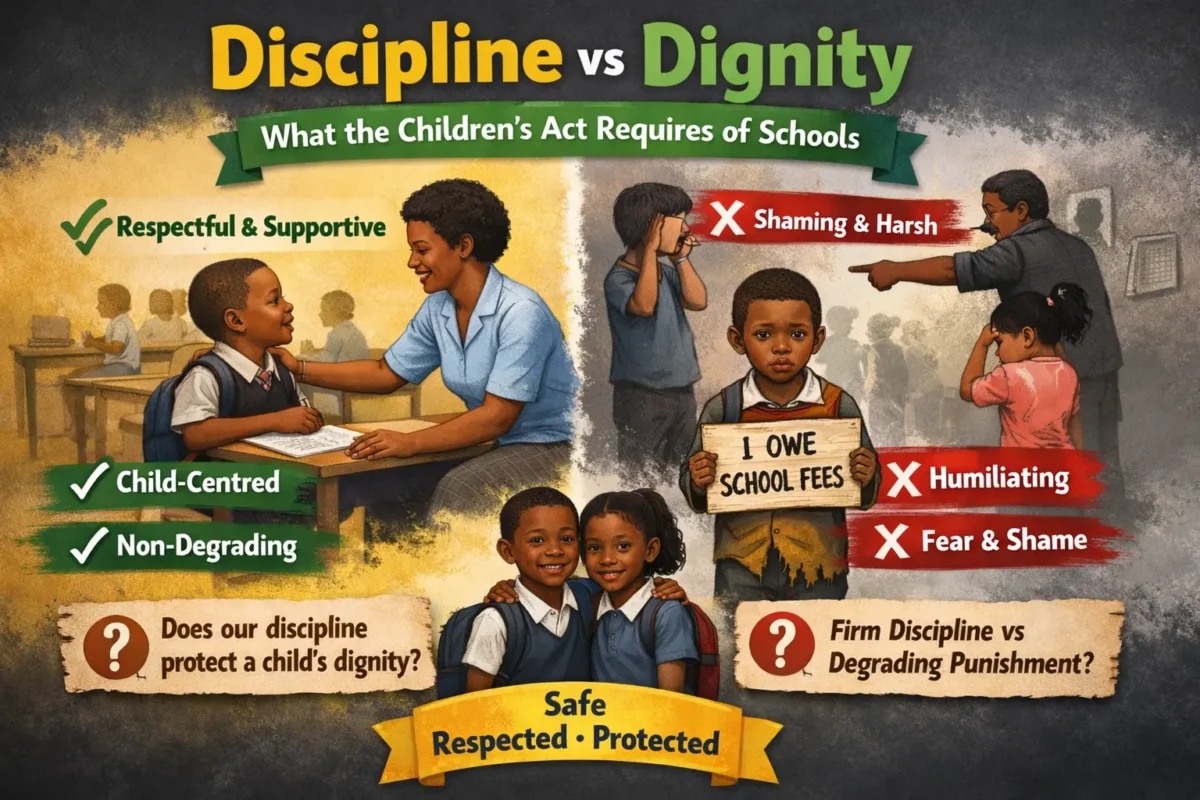
Discipline is lawful only when it is reasonable, non-degrading, and child-centred. Any form of punishment that humiliates, causes fear, or inflicts emotional harm goes beyond correction and may violate the law.
Did you know that disciplining a child because of school fees arrears or poverty can amount to degrading treatment?
School heads have a legal duty to ensure that discipline is never used as a tool for shaming or exclusion. This includes public embarrassment, excessive punishment, or harsh treatment linked to a child’s background.
Pause and reflect:
❓ Does our school’s disciplinary system protect a child’s dignity at all times?
The Act also places responsibility on school leadership to protect children from emotional and psychological harm within the school environment.
Another important question to consider:
❓ Are teachers clear on the difference between firm discipline and degrading punishment?
Strong school leadership maintains order without fear or humiliation, ensuring that every child feels safe, respected, and protected.
Keep following GH Educate for more