

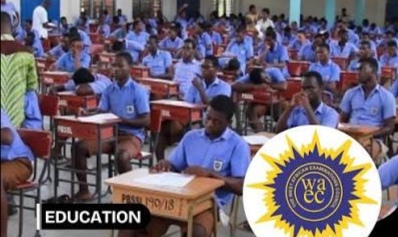
2024 WASSCE: Chief Examiners’ Report for Students, Teachers and Stakeholders
The 2024 West African Senior School Certificate Examination (WASSCE) Chief Examiners’ Report presents a detailed analysis of candidates’ performance across all subjects. The report outlines the standard of the examination, highlights candidates’ strengths, identifies key weaknesses, and provides guidance for improving future outcomes. Below is a subject-by-subject breakdown, following the exact structure presented in the official document.
General Résumé
Strength
- Questions were clear and syllabus-based, giving well-prepared candidates a fair chance to perform.
Weakness
- Candidates who relied on guesswork or selective study struggled, showing gaps in syllabus coverage.
Business Subjects
Financial Accounting
Strengths
- Day books and source documents: Candidates understood basic accounting records used in business transactions.
- Financial statements: Many could prepare income statements and balance sheets correctly.
- Not-for-profit organizations: Candidates showed awareness of their objectives and financial structure.
Weaknesses
- Provision for doubtful debts: Candidates lacked understanding of adjustments in final accounts.
- Incomplete records: Poor mastery of calculation techniques affected accuracy.
- Ledger accounts and error correction: Weak posting skills and misuse of journal proper were common.
Principles of Cost Accounting
Strengths
- Cost classification: Candidates could correctly group costs by function and behaviour.
- Relevant costing: Understanding of decision-making costs was evident.
- Economic order quantity: Candidates grasped stock level concepts.
- Activity-based costing: Some familiarity with modern costing methods was observed.
Weaknesses
- Break-even charts: Candidates struggled with graphical representation of cost and revenue.
- Payroll preparation: Errors showed weak practical exposure.
- Service income statements: Many confused service and trading organizations.
- Materials purchase budgets: Candidates failed to link usage to purchases.
Business Management
Strengths
- Computer applications: Candidates related ICT usage to business efficiency.
- Trade and taxation: Understanding of basic commercial activities was evident.
- Contract termination: Candidates showed knowledge of legal business concepts.
Weaknesses
- Levels of management decisions: Candidates confused strategic, tactical, and operational decisions.
- Small business challenges: Responses lacked depth and real-life examples.
- Expression: Poor communication reduced clarity of ideas.
Clerical Office Duties
Strengths
- Office departments: Candidates understood organizational office structure.
- Filing systems: Knowledge of filing methods was evident.
- Office equipment and mail room operations: Candidates showed familiarity with office tools.
Weaknesses
- Media of communication: Candidates confused media with forms of communication.
- Notice of meeting: Many could not present formal office documents correctly.
Typewriting
Strengths
- Formatting and layout: Candidates followed examination rubrics correctly.
- Spelling and alignment: Accuracy in tabulation and word usage was good.
- Envelope addressing: Proper positioning and format were observed.
Weaknesses
- Typing speed: Many could not complete speed and accuracy tests.
- Typographical errors: Poor vocabulary and lack of proofreading affected output.
- Centering and punctuation: Inconsistent formatting reduced presentation marks.
Government
Strengths
- Core concepts: Candidates understood governance and constitutional issues.
- Logical presentation: Answers were direct and focused.
Weaknesses
- Analytical questions: Candidates struggled with evaluation and discussion.
- Poor structure: Ideas were disorganized and poorly sequenced.
- Application: Limited use of current examples weakened responses.
Social Studies
Strengths
- Conceptual knowledge: Candidates understood key social issues and terms.
Weaknesses
- Lack of depth: Responses were brief and lacked explanation.
- Few examples: Candidates failed to relate concepts to real-life situations.
History
Strengths
- Direct answers: Well-prepared candidates addressed questions accurately.
Weaknesses
- Content gaps: Many candidates lacked factual historical knowledge.
- Interpretation issues: Questions were misunderstood or poorly analyzed.
Christian Religious Studies
Strengths
- Biblical themes: Candidates showed familiarity with major teachings.
Weaknesses
- Narrative explanation: Difficulty explaining events showed rote learning.
Islamic Studies
Strengths
- Qur’anic texts and Hadith: Candidates demonstrated good recall and understanding.
Weaknesses
- Key concepts: Poor explanation of topics like Iddah showed shallow understanding.
- Historical contributions: Limited detail affected clarity.
Geography (2 & 3)
Strengths
- Concept definitions: Candidates understood migration and environmental issues.
- Theoretical knowledge: General geographical understanding was sound.
Weaknesses
- Map work: Poor practical skills affected accuracy.
- Data interpretation: Candidates struggled with diagrams and statistics.
Music (2, 3A & 3B)
Strengths
- Music theory: Candidates understood rhythm and notation.
- Performance: Confidence and practical skills were evident.
Weaknesses
- Cadences and chord progressions: Weak foundational knowledge affected performance.
- Technical exercises: Limited practice reduced accuracy.
Economics
Strengths
- Utility and equilibrium: Candidates understood basic economic relationships.
Weaknesses
- Market adjustments: Poor explanation of demand and supply changes.
- Economic terms: Confusion reduced analytical quality.
Languages
English Language
Strengths
- Comprehension: Candidates could extract information from passages.
Weaknesses
- Grammar and sentence construction: Frequent errors affected clarity.
- Essay writing: Poor organization and weak arguments were common.
Literature-in-English
Strengths
- Knowledge of texts: Candidates recalled themes and characters.
Weaknesses
- Literary analysis: Lack of depth and weak textual references reduced scores.
French, Arabic & Ghanaian Languages
Strengths
- Vocabulary knowledge: Candidates understood basic expressions.
- Oral skills: Pronunciation and listening showed improvement.
Weaknesses
- Translation: Poor sentence construction affected meaning.
- Spelling and grammar: Errors reflected limited practice.
Mathematics
Core Mathematics
Strengths
- Basic arithmetic: Candidates handled simple calculations well.
Weaknesses
- Algebra and geometry: Poor conceptual understanding led to errors.
- Word problems: Weak interpretation affected solutions.
Elective Mathematics
Strengths
- Analytical thinking: Prepared candidates showed logical reasoning.
Weaknesses
- Advanced topics: Many lacked depth in calculus and vectors.
- Incomplete solutions: Steps were missing or poorly presented.
Science Subjects
Integrated Science
Strengths
- Basic concepts: Candidates understood everyday scientific ideas.
Weaknesses
- Practical application: Poor handling of experiments and data.
Biology
Strengths
- Terminology: Candidates understood basic biological processes.
Weaknesses
- Diagrams and explanations: Poor presentation reduced marks.
Chemistry
Strengths
- Identification of substances: Knowledge of chemical symbols was evident.
Weaknesses
- Calculations: Weak stoichiometry and mole concept understanding.
Physics
Strengths
- Fundamental principles: Candidates understood laws and concepts.
Weaknesses
- Numerical problems: Poor formula application affected accuracy.
Agricultural Science Subjects
Strengths
- Farming practices: Knowledge of crop and animal production was evident.
Weaknesses
- Practical explanations: Limited hands-on experience reduced clarity.
Technical Subjects
Strengths
- Tool handling: Candidates showed basic practical skills.
Weaknesses
- Technical drawings and measurements: Inaccuracy affected outcomes.
- Theory–practice link: Weak explanation of processes.
Vocational Subjects
Strengths
- Creativity: Design and artistic expression were evident.
- Practical skills: Candidates showed craftsmanship.
Weaknesses
- Finishing: Poor presentation reduced marks.
- Theoretical justification: Inadequate explanation of design choices.
Remember
The 2024 WASSCE Chief Examiners’ Report reveals steady progress in several subjects but also exposes persistent weaknesses in application, analysis, and practical execution. Addressing these gaps through focused teaching, regular practice, and syllabus-driven preparation will significantly enhance future performance.
Keep following GH Educate for more



One thought on “2024 WASSCE: Chief Examiners’ Report for Students, Teachers and Stakeholders”