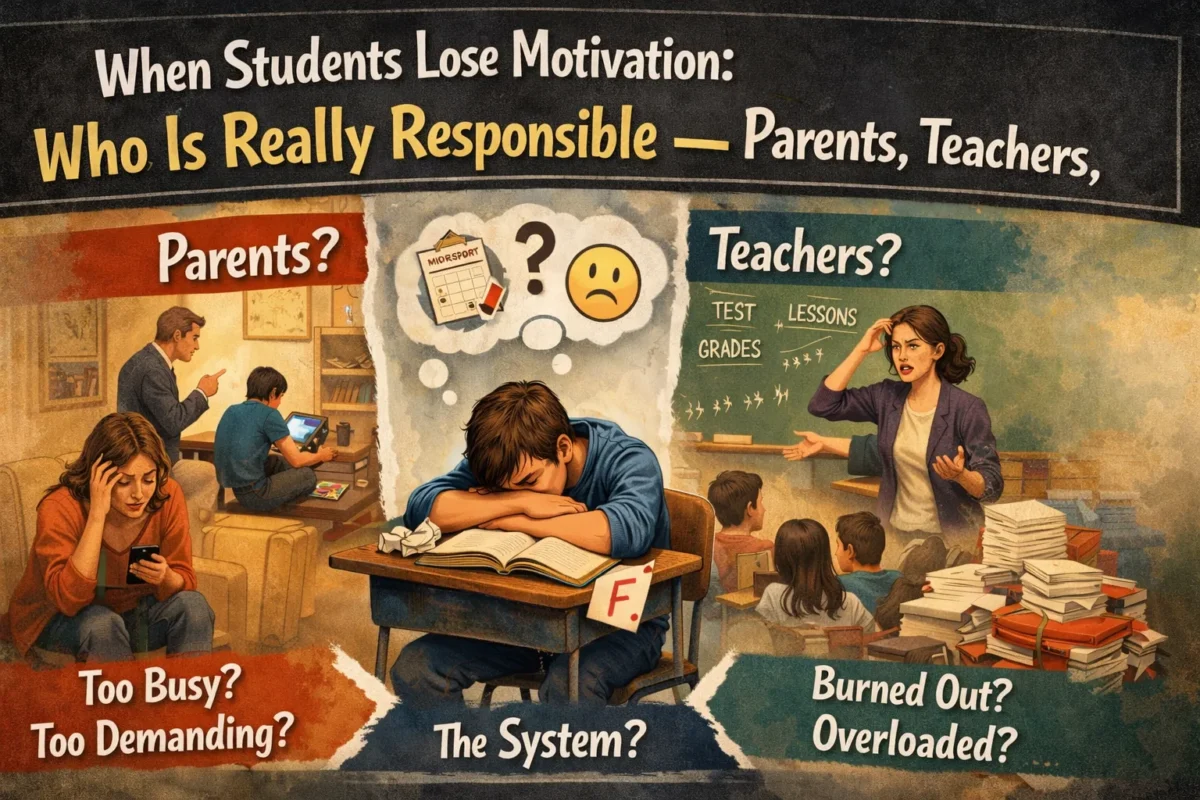
When a student begins to lose interest in learning, society is quick to ask a familiar question: who failed? Parents accuse teachers of not caring enough, teachers point to poor home support, and the system quietly absorbs the criticism without meaningful reform. Yet student motivation does not collapse overnight, and it is rarely the fault of a single stakeholder.
At home, parents play the first and most enduring role in shaping a child’s attitude towards education. Values such as discipline, curiosity, respect for learning and perseverance are not taught in classrooms alone. When children grow up without routines, encouragement, supervision or emotional support, school becomes a burden rather than a pathway. Motivation struggles to survive in homes where learning is not valued or monitored.
Teachers, however, remain the daily face of education. Their influence is powerful. A motivated teacher can inspire confidence, awaken curiosity and help struggling learners rediscover purpose. Conversely, poor teaching practices, lack of empathy, overreliance on punishment, or failure to recognise diverse learning needs can gradually extinguish a student’s desire to learn. While teachers operate under constraints, their professional responsibility to engage, guide and support learners cannot be ignored.
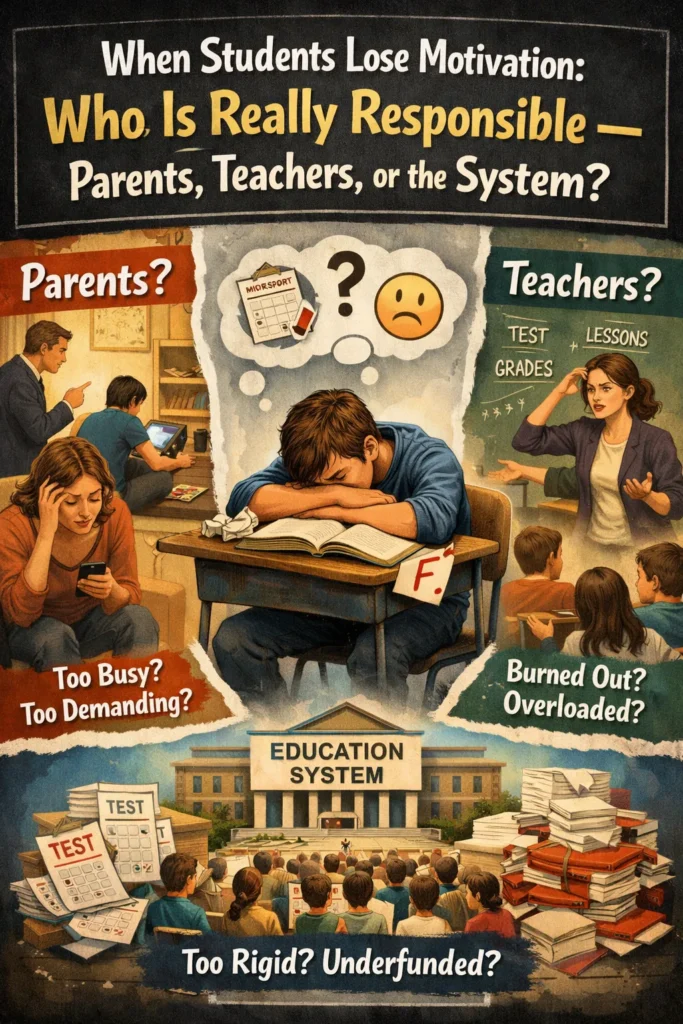
Beyond parents and teachers lies the education system itself. Overcrowded classrooms, inadequate learning materials, rigid curricula, exam-driven pressure and weak student support structures all contribute to learner fatigue and disengagement. When education becomes more about grades than growth, many students feel invisible, overwhelmed or left behind. Motivation suffers when the system prioritises outcomes over wellbeing.
Student motivation thrives where there is partnership, not blame. Schools that actively engage parents, communicate student progress, and collaborate on interventions often see better outcomes. Likewise, parents who work closely with teachers rather than confront them, help create stability and consistency for learners. Education works best when home and school speak the same language of support and accountability.
It is also important to recognise that students themselves are not passive victims. With guidance, mentorship and positive role models, learners can be empowered to take ownership of their education. Motivation grows when students feel heard, understood and capable—not when they are constantly compared, punished or labelled.
Ultimately, when students lose motivation, responsibility is shared. Parents must nurture and support, teachers must inspire and guide, and the system must create enabling conditions for learning. Until these three pillars work together, student disengagement will remain a recurring challenge. Education is a collective duty, and student success is a shared outcome.
Keep following GH EDUCATE for credible news and updates.