Constitution Day provides Ghana with an important moment to reflect not only on the legal foundations of the Republic but also on the institutions that sustain its democratic values. Central among these is the education system, which must serve as the primary arena where young citizens learn, understand, and internalise the principles enshrined in the Constitution. It is in the classroom that the foundation for responsible, law-abiding, and engaged citizenship is laid.
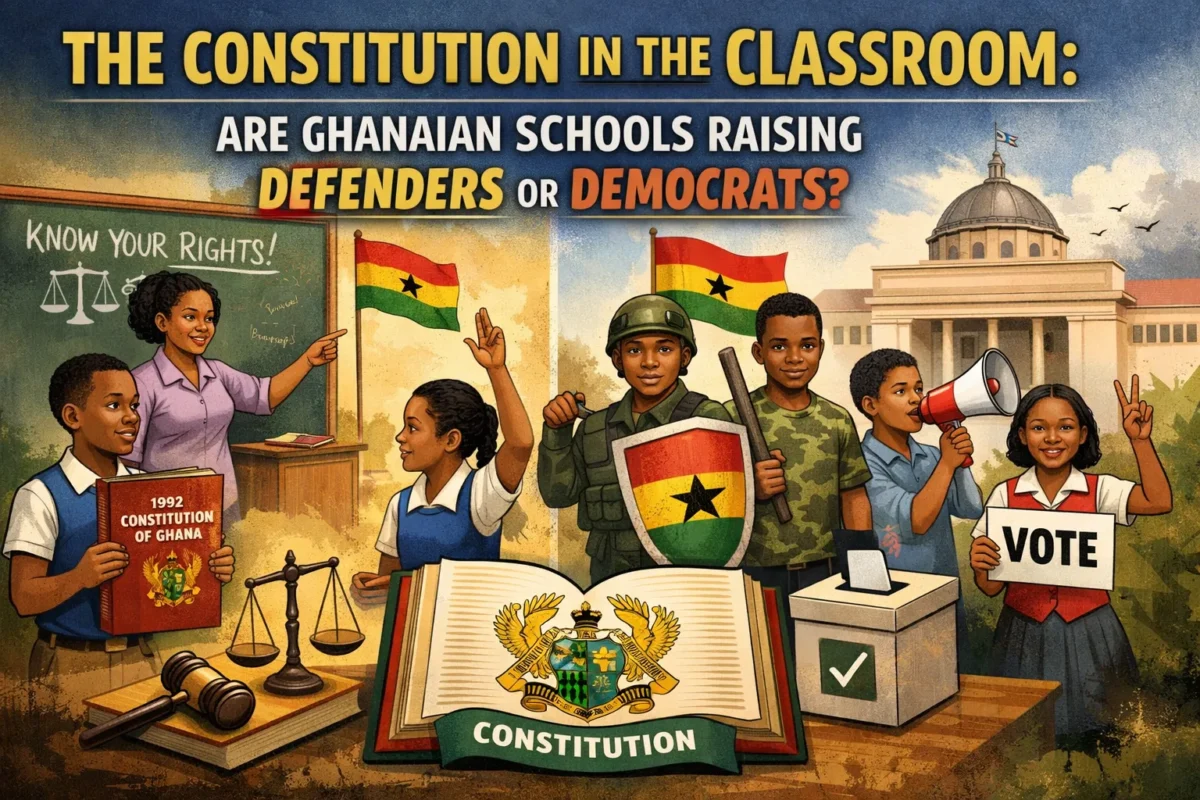
Recent trends in schools, however, reveal a troubling gap between constitutional ideals and student behaviour. Incidents of indiscipline, assaults on teachers, examination malpractice, and disregard for authority indicate a civic and moral deficit that threatens the very fabric of Ghanaian democracy. “Defenders of Rights” are citizens who actively uphold the law, respect the rights of others, and safeguard democratic principles, while “Democrats”, as used here, are those who enjoy the privileges of democracy but may lack civic responsibility. When students understand their rights but neglect their duties, the freedoms guaranteed by the Constitution are weakened at the root.
Civic education, though part of the national curriculum, has often been reduced to rote learning for examinations rather than genuine understanding or practice. Many students can recite constitutional provisions but fail to apply principles of responsibility, respect, and tolerance in everyday life. A thriving democracy cannot rest solely on knowledge of rights; it requires citizens who internalise their duties and act with integrity in the public and private spheres.
The 1992 Constitution clearly assigns responsibilities to every Ghanaian, including respect for lawful authority, protection of public property, and the promotion of discipline, unity, and national development. These values cannot be instilled through legislation alone. They must be nurtured deliberately in schools through consistent instruction, ethical leadership, and practical civic engagement that fosters both character and competence.
Teachers play a central role in shaping these values. Beyond delivering academic content, they serve as mentors and role models, guiding students in the cultivation of moral judgment, civic consciousness, and national pride. When teachers are disrespected, threatened, or assaulted, it signals not only a breakdown of school discipline but a dangerous erosion of respect for authority and democratic institutions themselves. Protecting and supporting teachers is therefore essential to the preservation of democracy.
Constitution Day should prompt a sober national reflection on the effectiveness of Ghana’s education system in producing responsible citizens. Are schools raising young people capable of engaging in peaceful dialogue, exercising lawful dissent, and contributing meaningfully to society? Or are academic achievements being prioritised at the expense of moral development and civic responsibility? These questions must guide policymakers, educators, and communities alike.
Ultimately, the strength and longevity of Ghana’s Constitution depend on the citizens that education produces. Schools must become spaces where constitutional values are not only taught but actively practised, nurturing true Defenders of Rights rather than passive Democrats. Only then will democracy in Ghana be more than a principle on paper—it will be a lived reality for generations to come.
Keep following GH EDUCATE for credible news and updates.