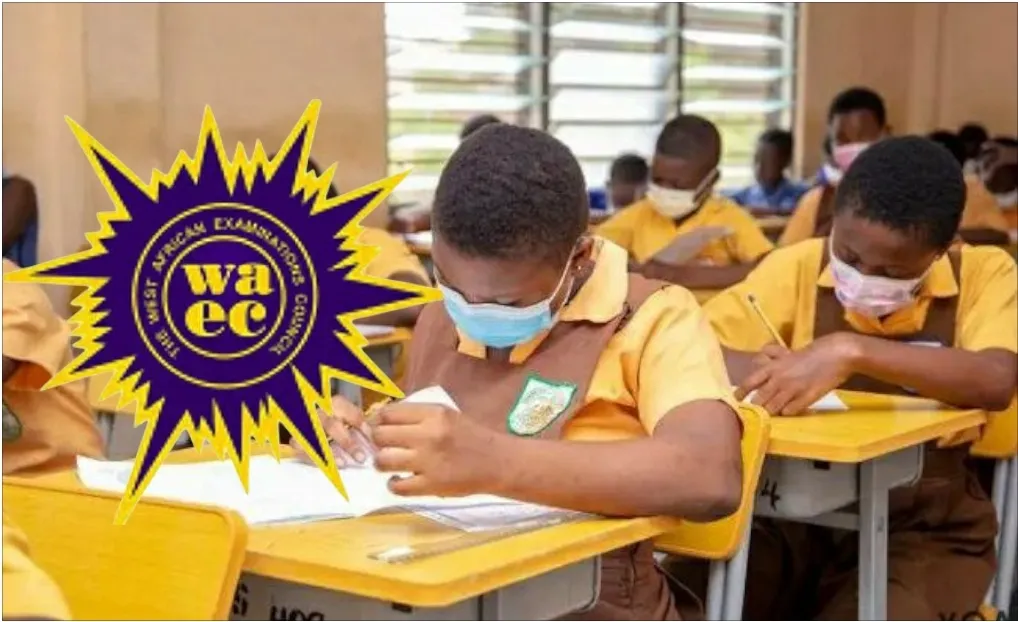
The 2024 Basic Education Certificate Examination (BECE) was conducted successfully across all regions. This report highlights candidates’ overall performance, strengths, weaknesses, and recommendations for future improvement. The aim is to provide feedback to schools, teachers, and students for better preparation in subsequent examinations.
Overall Performance
- Candidate performance showed a slight improvement compared to the previous year.
- Many candidates followed instructions correctly and structured their answers well.
- Despite improvements, certain areas, including comprehension, vocabulary, and language expression, remain weak points.
- Teachers and schools are encouraged to address these gaps to enhance candidate performance in future exams.
English Language
Strengths
- Most candidates attempted all questions and adhered to rubrics.
- Essays were generally well-structured, demonstrating understanding of introduction, body, and conclusion.
- Some candidates showed good command of vocabulary and clarity in expression.
Weaknesses
- Grammar errors, incorrect sentence construction, and poor punctuation were common.
- Vocabulary was limited, with some candidates misusing words or mixing languages.
- Comprehension questions revealed a tendency to lift irrelevant information from passages.
Recommendations
- Teachers should conduct grammar drills and vocabulary exercises regularly.
- Students should practice past questions and review examiner reports.
- Workshops for teachers should focus on updated teaching methods.
French Language
Strengths
- Candidates demonstrated understanding of basic vocabulary and sentence structure.
- Oral and written exercises showed improvement in sentence formation.
Weaknesses
- Frequent spelling errors and misuse of tense.
- Difficulty in answering comprehension questions that required critical interpretation.
Recommendations
- Intensive listening and speaking exercises.
- Emphasis on spelling and verb conjugation.
- Encourage reading French texts to enhance comprehension.
Religious & Moral Education (RME)
Strengths
- Candidates could explain basic moral lessons and community values.
- Understanding of religious stories and principles was evident.
Weaknesses
- Difficulty in applying teachings to real-life situations.
- Weak knowledge of specific religious texts and stories.
Recommendations
- Teachers should encourage practical applications of RME lessons.
- Use storytelling and role-play to enhance understanding.
Social Studies
Strengths
- Knowledge of colonial history, national unity, and cultural practices was evident.
- Some candidates understood community development concepts.
Weaknesses
- Challenges in defining political stability, governance, and NGOs’ roles.
- Weaknesses in answering questions related to conflict resolution.
Recommendations
- Use case studies and local examples to explain complex topics.
- Encourage group discussions and project work for practical learning.
Integrated Science
Strengths
- Candidates identified soil types, mixed farming techniques, and scientific facts.
- Practical knowledge was visible in some laboratory tasks.
Weaknesses
- Difficulty distinguishing observations from conclusions.
- Incorrect use of scientific units and symbols.
Recommendations
- Increase practical exercises and experiments.
- Reinforce correct use of scientific terminology and units.
Mathematics
Strengths
- Strong performance in algebra, ratio problems, and frequency distribution tables.
- Some candidates solved word problems correctly.
Weaknesses
- Frequent errors in laws of indices, fractions, and complex word problems.
- Poor presentation of solutions.
Recommendations
- Teachers should integrate real-life examples into problem-solving exercises.
- Encourage step-by-step working and regular practice tests.
Information and Communication Technology (ICT)
Strengths
- Candidates showed good knowledge of basic computer operations, software terminology, and keyboard shortcuts.
Weaknesses
- Spelling mistakes (e.g., “Fire force” instead of “Firefox”).
- Difficulty in using emails, spreadsheets, and data entry tasks.
Recommendations
- Conduct more hands-on ICT lessons.
- Emphasize accuracy and attention to detail in practical exercises.
General Recommendations
- Teachers should teach all aspects of the syllabus thoroughly.
- Regular practice exercises and past question reviews are essential.
- Candidates should read examiner reports to understand expected answer formats.
- Organize teacher workshops to improve instructional methods.
- Encourage group discussions and peer learning to reinforce knowledge.
Conclusion
The 2024 BECE candidates demonstrated improvement in several areas, but consistent weaknesses remain. Teachers, schools, and students should focus on practical applications, language mastery, and exam preparation strategies. Implementing these recommendations will contribute significantly to enhanced performance in future examinations.
Keep following GH Educate for the latest news and updates
Kindly share with others